Risk Assessment Wizard

Create clear, professional risk assessments in minutes. List hazards, set measures and assign responsibilities, then download a clean PDF branded with your organisation.

Get Started

  • Create a Risk Assessment
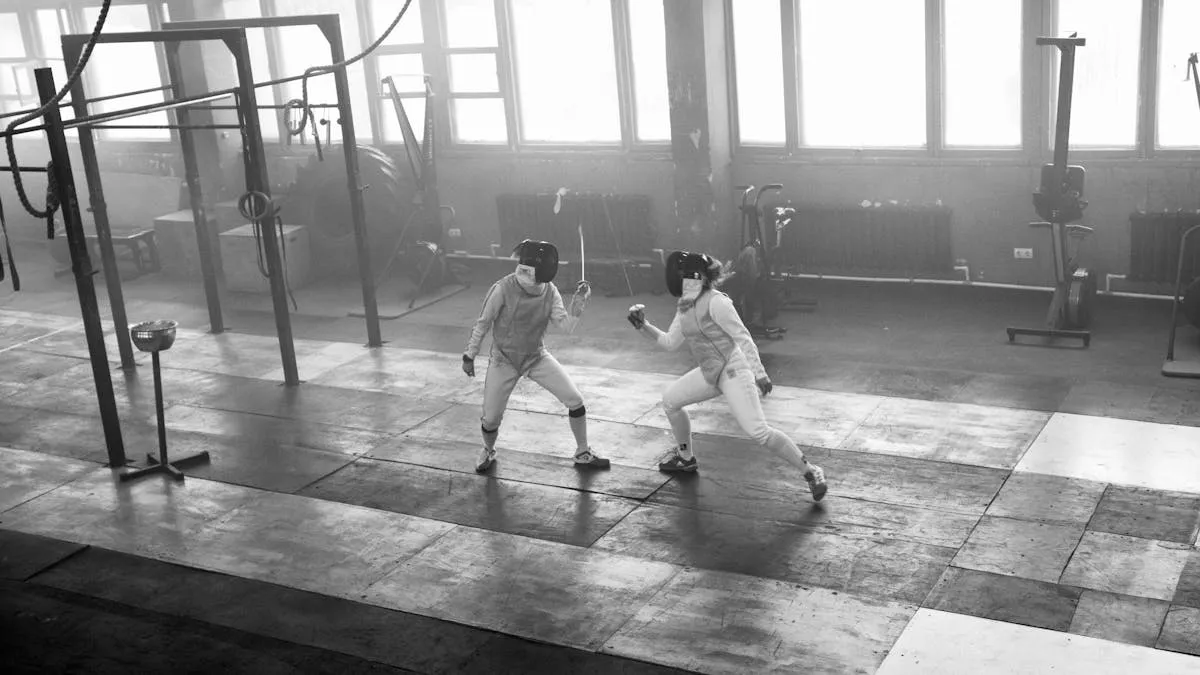
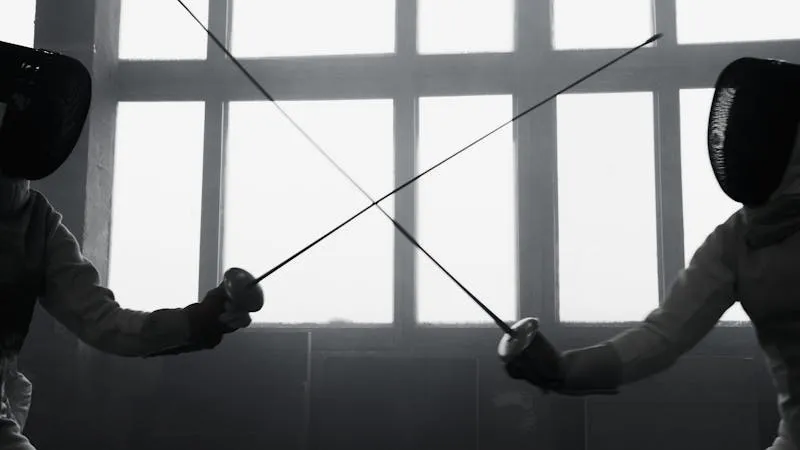
Two fencers dueling with swords in competition
Sports & Recreation

Fencing Risk Assessment Template

The complete guide to creating professional risk assessments for fencing clubs, schools, and competitions. Covers foil, epee, and sabre disciplines.

Free to use Instant PDF download Updated February 2026

The essential guide to fencing safety

Fencing is one of only five sports featured in every modern Olympic Games since 1896. It combines physical agility, tactical intelligence, and lightning-fast reflexes in an elegant sport often called "physical chess."

Despite its reputation as a safe combat sport due to extensive protective equipment, fencing requires careful risk management. Blade breaks, point injuries, and equipment failures can occur without proper safety protocols.

This guide covers the three Olympic disciplines—foil, epee, and sabre—and provides comprehensive hazard identification and control measures for clubs, schools, and competition organisers.

Two fencers dueling with swords in competition
Sport & Fitness

Why fencing is worth the investment

Cardiovascular Fitness

Enhances cardiovascular fitness and endurance through rapid and sustained fencing bouts.

Hand-Eye Coordination

Improves hand-eye coordination and reflexes essential for effective striking and defense.

Strategic Thinking

Develops strategic thinking and tactical planning required for match play.

Mental Focus

Boosts mental focus and concentration necessary for anticipating opponents' moves.

Flexibility & Agility

Increases flexibility and agility through dynamic footwork and body movements.

Physical Fitness

Supports overall physical fitness and muscle tone through active engagement.

Key hazards & control measures

Improper Protective Equipment High Risk
Potential Harm

Increased injury severity, cuts, bruises, fractures.

Control Measures
  • Train on correct use of masks, jackets, gloves, plastrons
  • Ensure all protective gear fits properly
  • Regularly inspect and replace damaged equipment
  • Enforce gear use during all sessions
Poorly Fitting Protective Gear High Risk
Potential Harm

Reduced protection leading to injuries, discomfort, gear failure.

Control Measures
  • Ensure protective gear fits correctly and meets FIE standards
  • Provide fittings for participants
  • Replace non-approved or ill-fitting gear
Collisions Between Fencers Medium Risk
Potential Harm

Bruises, fractures, concussions, cuts.

Control Measures
  • Educate on proper distancing and engagement
  • Enforce rules to prevent reckless behavior
  • Supervise bouts to ensure controlled interactions
Uncontrolled Actions (Fleching) Medium Risk
Potential Harm

Accidental injury due to uncontrolled movements.

Control Measures
  • Teach controlled techniques emphasizing safety
  • Supervise drills and enforce engagement distances
  • Use protective gear to reduce injury severity
Wet or Dirty Floors Medium Risk
Potential Harm

Slips, trips, falls, sprains, fractures.

Control Measures
  • Regular floor inspections and maintenance
  • Use non-slip surfaces and proper drainage
  • Require appropriate fencing shoes
Safeguarding High Risk
Potential Harm

Risk of abuse or neglect, especially for minors.

Control Measures
  • Implement comprehensive safeguarding policy
  • Conduct background checks on all coaches
  • Establish clear reporting procedures
  • Never leave minors unattended
Weapon Storage Medium Risk
Potential Harm

Equipment falling, injuries from loose weapons, theft.

Control Measures
  • Implement secure storage for weapons after use
  • Train participants on proper storage procedures
  • Use lockable cabinets or racks

This guide covers the most common hazards. Our risk assessment wizard includes 34 hazards and 132+ control measures for Fencing, sourced from industry guidance — create your assessment in minutes.

Equipment requirements

FIE (International Fencing Federation) standards require comprehensive protective equipment:

Mandatory Equipment

  • Mask - FIE-approved with appropriate mesh strength (1600N for competition)
  • Jacket - Full fencing jacket covering torso and arms
  • Plastron - Underarm protector worn under jacket
  • Glove - Weapon hand protection
  • Breeches/Knickers - Protective fencing trousers
  • Chest protector - Mandatory for women, recommended for all
  • Fencing shoes - Appropriate grip and ankle support

Weapon-Specific Requirements

  • Foil - Lame (metallic vest) for electronic scoring
  • Sabre - Lame covering entire target area, conducting mask
  • Epee - No additional electronic clothing required

Pre-session checklist

Venue & Equipment

  • Piste (fencing strip) clean and clear
  • Floor dry and non-slip
  • Blades inspected for damage
  • Electronic scoring equipment tested

Participants

  • Full protective equipment worn
  • Masks meet safety standards
  • Plastron worn under jacket

Ready to create your fencing risk assessment?

Use our online wizard to build a professional risk assessment in minutes.

Start Your Free Risk Assessment